Los días de la semana

Los días de la semana

Sunday, October 1, 2017

Hispanic Heritage Month 2017

Hola a todos,
This year, I wanted my students to "travel" around the world and assume a new identity.
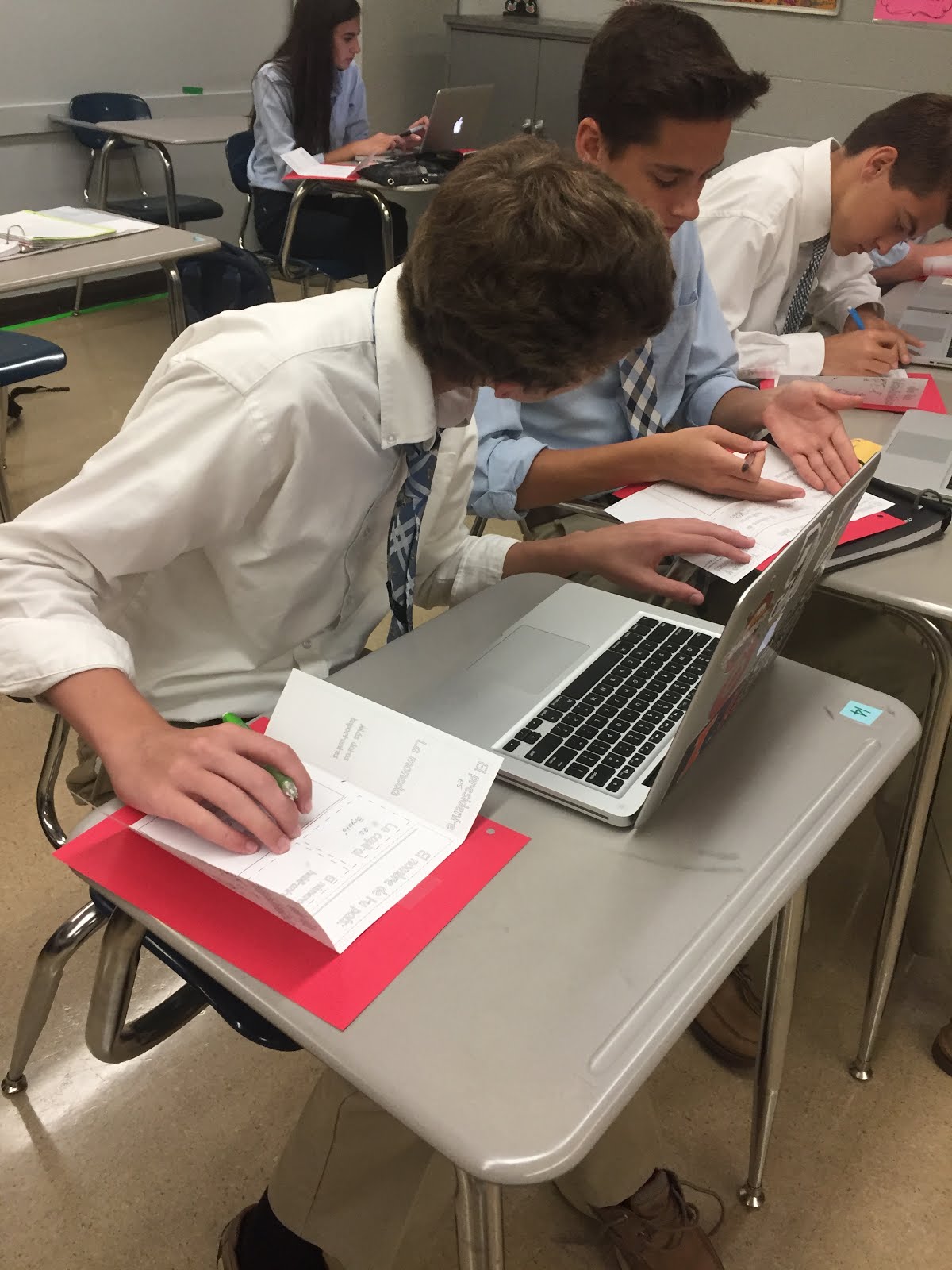
I put together this cute "gate fold" worksheet to make the activity a bit more artsy and fun!
Students had a chance to select their new identity from a list I provided. Then they each researched some facts about the person and their country of origin.
This week, when the handouts are done, they will have a chance to talk to each other, learn about others and jot down some notes.
What they don't know yet, is that after getting to "know" each other, we will be able to play a game of guessing who and discovering identities! I will read some of the information they each shared and in teams they will guess who the person is. At the end, the team with most correct guesses will win!
Check out the handout.
I would love to hear how you are incorporating hispanic heritage month into your classes.
Until next time,
Señora


Monday, September 11, 2017

Todo sobre mi

Welcome back everyone!

The last few weeks have been very exciting in our classroom. We have been getting back into our structure, and for my new students it has been a time to get adjusted to my routines.
One of my favorite things to do in order to review some of the basics, is to have students interview one another. We do this in steps of course!

So, with each "grammar point" I want them to review, we sample some questions and possible answers. Then they must walk around and interview other people. Our follow up is to come together as a class and make some conclusions.

So, if we are reviewing the verb SER, our key question is ¿Cómo eres? First, students must look through our list of adjectives (from a previous lesson on gender and number) and decide how they would describe themselves. Then they walk around and interview one another. The last step is for some volunteers to report on the people they interviewed. For a competitive twist, I jot down the adjectives students share into a march madness bracket. When filled out, we practice the plural questions of ¿Cómo somos? and ¿Cómo son?.  The adjective that receives the most votes, moves on. This is a fun a way to find out things we have in common and things that makes us different!

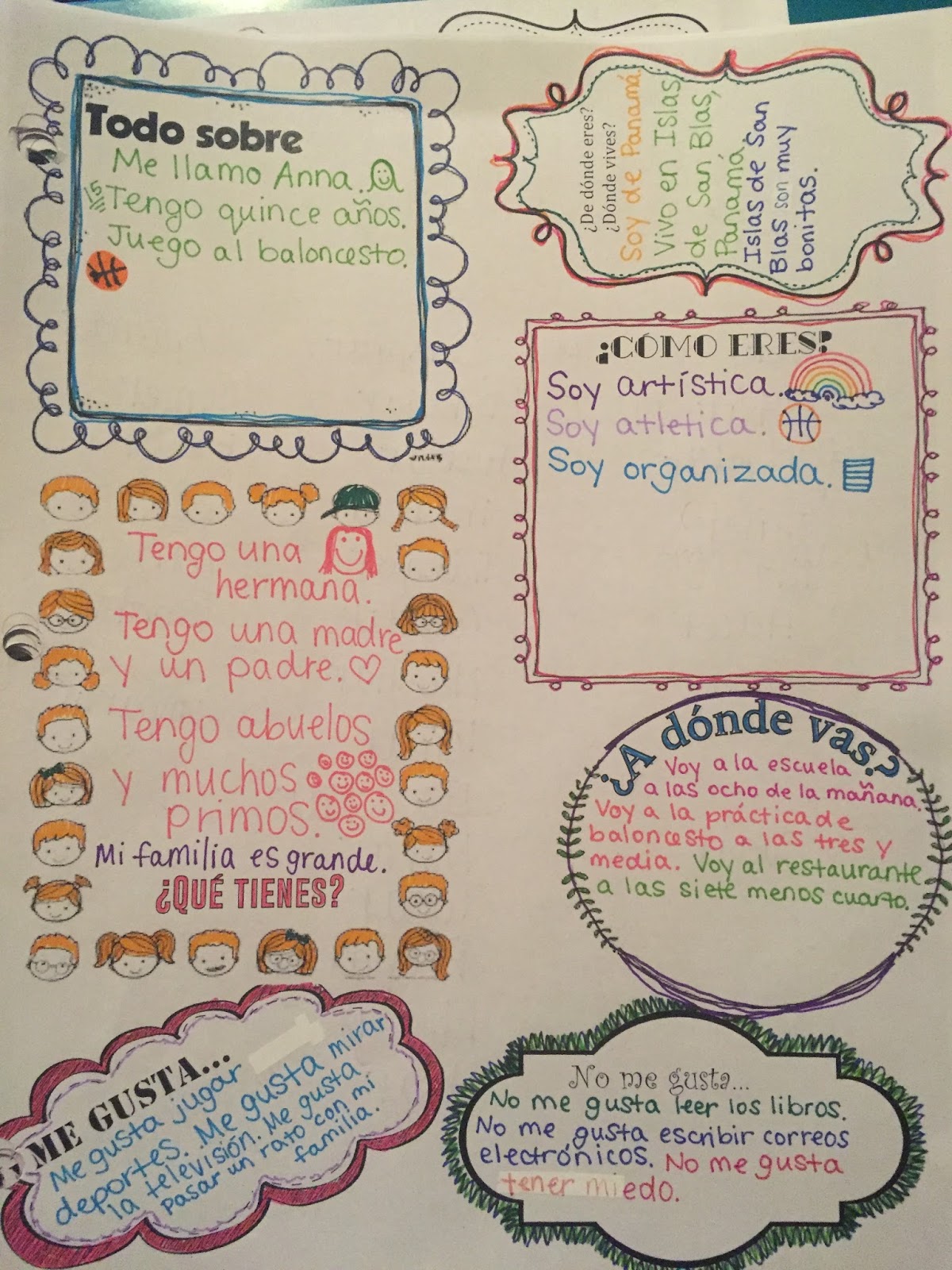
Similar interview/report activities took place with the verbs, tener, estar, ir, and gustar. At the end of the unit, as we prepare for our formal assessment, the students put everything together into an "all about me" infographic! Here are some samples from my students this trimester.

How do you review some of these basics in your classroom?

*Update* Download the template here


Tuesday, May 16, 2017

How I Cinco de Mayo

How I “Cinco de Mayo”.

Every year, I think SO hard about ways in which I can educate those around me about Cinco de Mayo. “Why does she need to do that?”, you may ask. Well, this year I had one of my favorite bloggers put into words the things I was feeling! This is what she wrote: 

“I remember my first year as a Spanish teacher in the United States. I was also new in the country and have to admit that I had never heard of "Cinco de Mayo." I was quietly walking into the school library when I suddenly heard "Happy Cinco de Mayo." Happy Cinco de Mayo? What was that all about? It was another teacher wishing me the best Cinco de Mayo ever! I was so confused and asked, "What are you talking about? Cinco de Mayo?" She opened her eyes widely and told me, "I can't believe it! You are a Spanish teacher and you don't know anything about Cinco de Mayo?" She was so right, I didn't know anything about it! I was so embarrassed and shyly said, "No, I don't know anything about it." Oh, well, it's a Mexican celebration", she said.  And that answer was how our conversation ended. 

I went to look for the other Spanish teachers in the district and they told that me they didn't want this to be included in the curriculum, that this was a celebration filled with a lot of stereotypes, burritos, tacos and other icons that don't even exist in the Mexican culture. As years went by, I decided that it was not to be a big part in my curriculum, that it was not even important to mention it or include other Mexican celebrations in my class. How wrong I was! Soon enough I learned that as a language teacher, it is my responsibility to help guide that young people beyond stereotypes. I heard things I am sure other Spanish teachers have heard: "El Dia de los Muertos" is like Halloween, or the Cinco de Mayo is the Mexican Independence Day. 

I have decided to take a more proactive role, to educate myself about other cultures and share what I know with my students. This is why, I, a Colombian Spanish teacher celebrate "El Cinco de Mayo." I have challenged myself to take my students beyond sombreros, tacos and burritos.” 
http://funforspanishteachers.blogspot.com/2012/05/why-do-i-celebrate-cinco-de-mayo-in-my.html


and incorporated it into my classes. In her blog, aimed for elementary educators, she teaches everyone about Frida Khalo and then has a fun project about making Frida’s “casa azul”.  The units being presented in my classes lend themselves to be able to create a short biography about who she was (preterit vs. imperfect) for one class, and my other class wrote some descriptions about the house itself (ser vs. estar). The results were incredible and multi-purpose! 1. Students were educated on what Cinco de mayo really is about; 2. they learned more about other cultures (mexican) by reading about Frida; 3. researched and used what we were learning in class; 4. HAD FUN by creating their own houses!


Take a look at some of the spectacular samples.


UPDATE:   Since writing this post in 2017 the world has changed a LOT! With 2020 and COVID, many places have made virtual tours to give us a way to travel. 
Check out this amazing tour of Frida's "Casa azul"


Wednesday, February 1, 2017

Mission conjugation: NOT impossible!

We all dislike them but we all admit that, at some point in the process of acquisition, we have to see if students are using a particular tense correctly.

There are many ways to present students the idea of conjugation drills. I often try to tap into their competitive spirit, and therefore include many games into our daily "warm up" activities.

At the beginning stages of a chapter, students are still trying to commit the new vocab and new conjugations to memory. In an effort to put them on the spot and perhaps encourage them to study a bit more every night, I introduced my conjugation scrabble.

There are few rules to this game and therefore set up is easy and playing it is even easier!

In the TL, I share some of the key phrases that they will use in their game: "Palabras con amigos". This is my classroom version of the popular app "Words with friends". At some point in their lives they have actually played the original scrabble, done a crossword, or even used the app themselves. Therefore the details on how to actually play the game go smoothly.

Phrases like "my turn", "how do you spell", "who is the subject", "that is not correct" are all phrases that they must incorporate in their interactions while playing the game. The ultimate goal is for them to have some basic conversation while practicing their new conjugations.

The game went well! Students got into it! When time ran out (I set a timer to prevent it from going too long and therefore having students stop using the TL) students had to take their notes out and revise their spellings. The student who had the most words was the winner. Any spelling mistakes counted the verb as wrong. Winners enjoyed a small treat!

The next day we had a different activity and everyone seemed to have gone home and reviewed. So, in my eyes, Mission conjugation:Accomplished.

Wednesday, October 26, 2016

Los monstruos!

Hola everyone,

Halloween is around the corner and my current unit about clothing and reflexive verbs fits perfectly with a review of body parts as well.

This has been one of the most entertaining lessons we have had as a group and I hope their energy and enthusiasm continues as we wrap up the trimester. Never underestimate your teenage students! They LOVE "kid like" activities.

First students listened to a description I made about a particular creature that I had created. While listening, they were asked to draw the things they heard. After the listening part was over, we compared our end results. It was fun for them to see how differently each of them interpreted the same information! Let them tell you why it was different or why it was the same. If you sample one of the possible dialogues, you can break out into partners or small groups for a more intimate conversation.
_____________

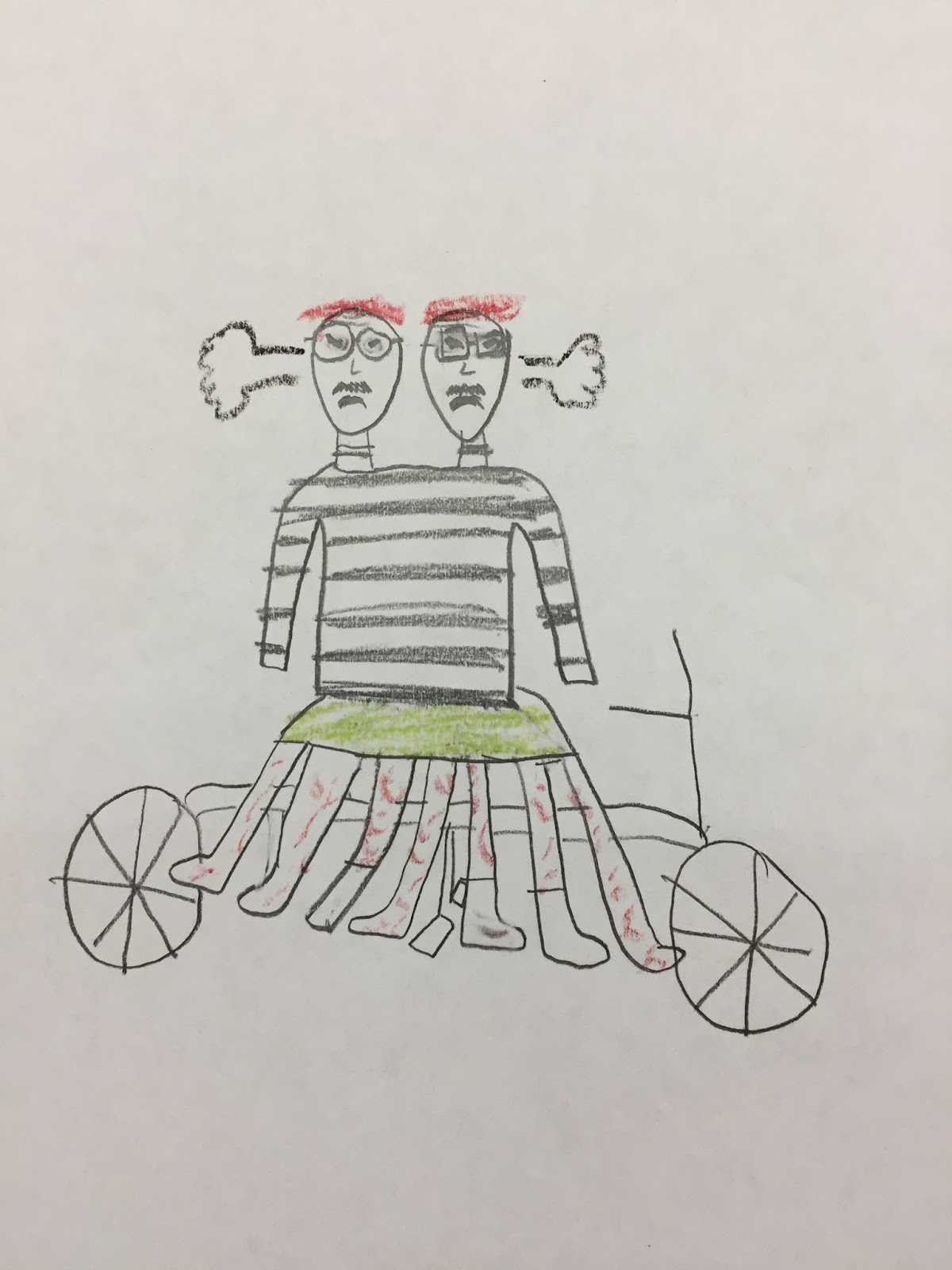
Now it was THEIR time to create! Each student had to come up with 10 original descriptions about their character. For the purpose of our lessons, they had to include reflexive verbs as well! There was lots of laughs and comparisons going on. Once the written portion was completed they had to create their visual representation.
**The sky was the limit for this part.  From digital, to hand drawn, to magazine clippings. All was fair game as long as it matched their description**

______________

Today, all the final products will be displayed around the room. I will have different students read different descriptions while the rest of them walk the room and have to select what illustration corresponds to what they hear. Since they are very competitive, I am sure a winner will emerge and some candy will be shared!

Happy Wednesday, and have a great Halloween week/weekend with your students.

Señora Botero-Moriarty.

**Check out these great illustrations, and be sure to follow me on facebook to see more updates to the blog**  Like me on Facebook


UPDATE!!
Since that original post, I have worked with smaller children who have also loved this type of activity.
Check out my store and see the younger learner version of this cool activity as well as some other cool activities related to the body theme.

⭐ Body parts - El cuerpo: Dibuja un monstruo
⭐ Body parts - El cuerpo "Yo tengo, ¿Quién tiene?"
⭐ Body parts - El cuerpo


Tuesday, October 11, 2016

Los verbos reflexivos y la rutina diaria

Tired of grading "boring" papers?
Trying to incorporate more technology into your daily routine? --pun intended =D
Look no further than storyboardthat.com!


Earlier this trimester I was introduced to this wonderful tool by some of my students. They were working on telling a story and were able to earn some extra credit by creating some illustrations. Since not many of us are Picasso, some used the help of this tool. Ever since, I have been using often.

It is a very user friendly app, and the free version is pretty awesome. I may be purchasing the teaching one next year since I will be implementing it more and more!

For the particular activity that I am sharing with you today, students were learning about reflexive verbs and daily routines. After creating a calendar and writing out their routine they took to the app to make their illustrations. When they presented it to the class, it was a lot more fun to hear their stories alongside their personalized renditions!

For a different level class learning the classroom vocabulary along with location words, I was able to use this tool to create my own custom made scenarios! I made a few and posted them around the room. Students were able to walk the classroom and jot down some different descriptions about the items they saw in each picture! Works wonders for vocab activities.

As you can see, the sky is the limit with this app!!!
Are you interested in trying it? I would love to hear how you used it in YOUR classroom!
Share your ideas in the comments and enjoy creating some incredible art!

Feliz martes,

Andrea

Monday, September 5, 2016

Emotions, descriptions and exit tickets

Exit tickets
After a long maternity leave and a wonderful summer, I am back at school and excited for a new school year at a new school! For a few months now I really wanted to try and incorporate exit tickets in my classroom so reviewing emotions, adjectives and gender and number agreement was the perfect way to use them.

My current level 2 students have had different instructors at level 1. Therefore I wanted to see how much review we needed to do in order to get us all on the same page with regards to the topics mentioned above.

Students were asked to answer the following questions:
1. ¿Cómo te llamas? What is your name
2. ¿Cómo eres? How are you? -- Describe yourself
3. ¿Cómo estás? How are you? -- How are you feeling

Three quick answers and LOTS of information easily gathered with this custom made "friends".  Now that the students have been introduced to this assessment tool, I know I will be using them more often.

**Also, after gathering the information I needed, these were displayed on the door for them to see other people´s answers and drawings!**

How do you use exit tickets?